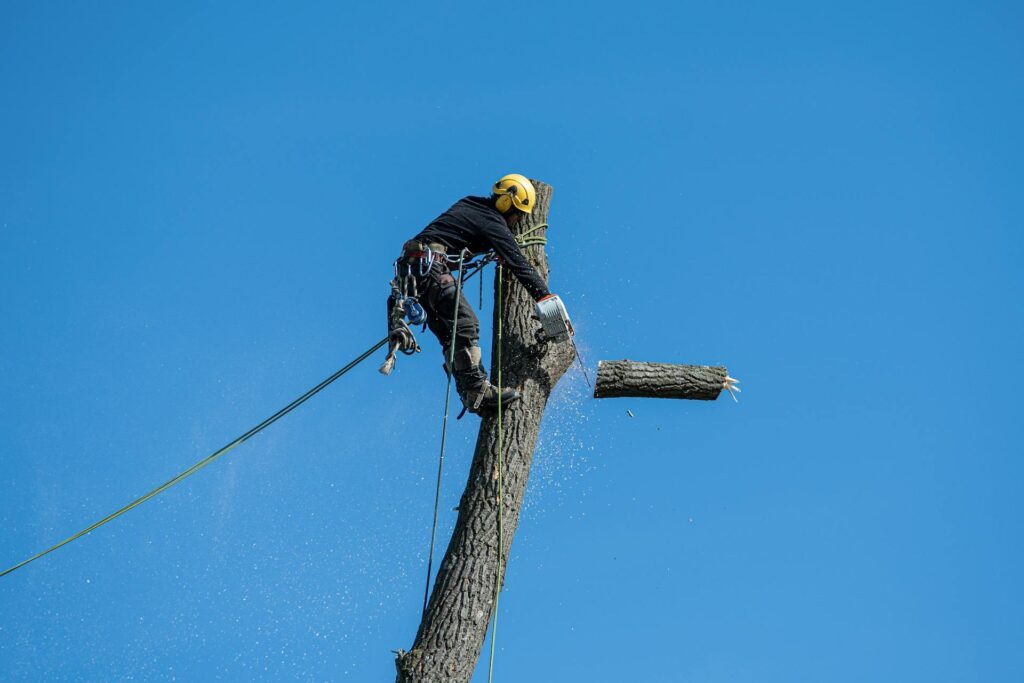
If a tree on your Murfreesboro property is dead, leaning toward a structure, tangled with utility lines, holding up by one side of its root ball, or just too big to trim without a full cleanup, the right removal estimate is the best next step. This page is for high-intent homeowners and property managers who need a clear, local answer on whether removal is the safest, most practical option.
Tree problems that demand a removal estimate
Most property owners in Rutherford County notice a warning sign before it becomes a structural headache. A trunk that leans toward the house, limbs brushing the roofline, cracked bark that peels back to bare wood, a raw wound after a summer storm, or repeated limb drop during the growing season all deserve more than a trim. Clay-heavy soil combined with Tennessee storms can accelerate root failures, turning a once-solid tree into a hazard overnight.
Delaying removal usually costs more. A tree that leans more after every rain or drops a branch on the driveway is writing a damage memo that may end up on your roof, fence, or neighbor’s lawn. An estimate gives you clarity: what the tree really needs, what’s safe to do next, and how fast it can happen on your schedule.
Contact our team to request a removal inspection summary and document the condition before the next storm.
Signs your Murfreesboro property needs tree removal
- Dead or brittle branches falling without wind during Murfreesboro’s humid months
- Visible trunk splitting, fungal growth at the base, or bark peeling in wide strips
- A tree leaning toward the house, garage, driveway, or power lines — especially if the lean increased after storms
- Roots heaving above the soil line or tugging at retaining walls, sidewalks, or patios
- A tree that has been hit by lightning, hail, or high winds and never fully recovered
- Repeat limb loss or visible crown dieback where trimming can no longer stabilize the structure
- Storm-damaged trees that are still standing but look structurally compromised or unstable
- Unknown volume of limb debris that makes your yard unusable and invites pest issues
If you are uncertain, an estimate call is still a smart move. It gives you a documented look at safety, scope, and cost without locking you into a job.
What influences removal scope, safety, and the estimate
Tree removal is never just about cutting the trunk. Our estimate process highlights the factors that shape the work:
- Tree size and height: Taller, wider trees need more rigging, cranes, or staged lowering, which affects crew size and time on site.
- Location and access: Trees near homes, garages, driveways, decks, or landscapes require careful rigging, staged drop zones, and clean-up plans.
- Hazard level: Leaning trees, storm-damaged trunks, and trees nailed to utility lines escalate the risk profile and the safety plan.
- Stump and debris desires: Stump grinding or removal, chip spreading, and hauling off brush add predictable scope to the quote.
- Site conditions: Wet ground, mud, tight yards, or fences mean crews bring in mats, extra rigging, and stabilize staging areas.
We document these factors during the estimate call or site visit, then deliver a plain-English summary that removes guesswork. You get a single point of contact, a plan of action, and a timeline that respects your schedule.
Ready for a scoped tree removal plan? Request an estimate.
Storm damage, leaning, and hazard situations
Murphy’s Law is real when a tree starts leaning or loses limbs during a Murfreesboro storm. A tree that was fine before a thunderstorm can show a fresh split, hanging limb, or shifted root ball afterward. Waiting until the next storm multiplies the risk to roofs, fences, power lines, and even your neighbors’ yards.
If a tree is leaning toward a structure, sliding in its root zone, or has major limbs hanging over a driveway or parking area, this is the part of the estimate that identifies whether it should move up your priority list. We work through the hazard scenario, show you how the tree will likely behave during the removal, and explain the safest staging before any cutting begins.
Safety-first process for Murfreesboro tree removal
- Tell us what’s happening. Send photos, describe the tree, and highlight nearby structures or utilities.
- We assess risk. The crew reviews lean, rot, proximity, and soil conditions to determine how to approach it safely.
- We schedule a removal window. Controlled removals happen on your timeline, not the next severe weather event.
- Execution with clean-up. We cut, lower, grind stumps when requested, chip, and haul debris away so the site is ready for your next project.
Every step is documented, insured, and code-aware. We focus on the safest, most efficient path to making the property usable again.
Why Murfreesboro property owners choose this team
- Local expertise, clear estimates, and property protection across Rutherford County
- A focus on Murfreesboro, Smyrna, Christiana, La Vergne, Rockvale, and Eagleville before scheduling crews elsewhere
- Safety credentials with rigging, lowering, and hazard-tree tactics treated like an insurance-grade inspection
- Transparent cleanup: chips can be left on-site or hauled, stump work is optional, and you choose the finish
Serving Murfreesboro and Rutherford County
We cover Murfreesboro neighborhoods such as Blackman, Barfield, Reunion, North Murfreesboro, central corridors, and surrounding communities including Smyrna, La Vergne, Christiana, Rockvale, Eagleville, Lascassas, Walter Hill, and other pockets with good access. If a tree is creating a safety concern near Murfreesboro, reach out so we can confirm coverage before the next big storm.
Tree removal questions
Still have questions? Visit the FAQ or request an estimate and describe your tree situation so we can prioritize the safety review.
Related tree removal services
Tree removal overlaps with several adjacent services. For a tree that has already died — bare canopy in midsummer, peeling bark, fungal growth at the base — see our page on dead tree removal, which covers why removing a dead tree is more dangerous and more expensive than removing the same tree alive. For larger projects where multiple trees, brush, and understory all need to come out of a parcel — new construction lots, overgrown commercial sites, or wooded acreage being prepped for development — see land clearing in Rutherford County. For trees showing immediate failure risk, see hazardous tree removal; for fallen trees and storm cleanup, see storm damage tree removal and 24/7 emergency tree service.