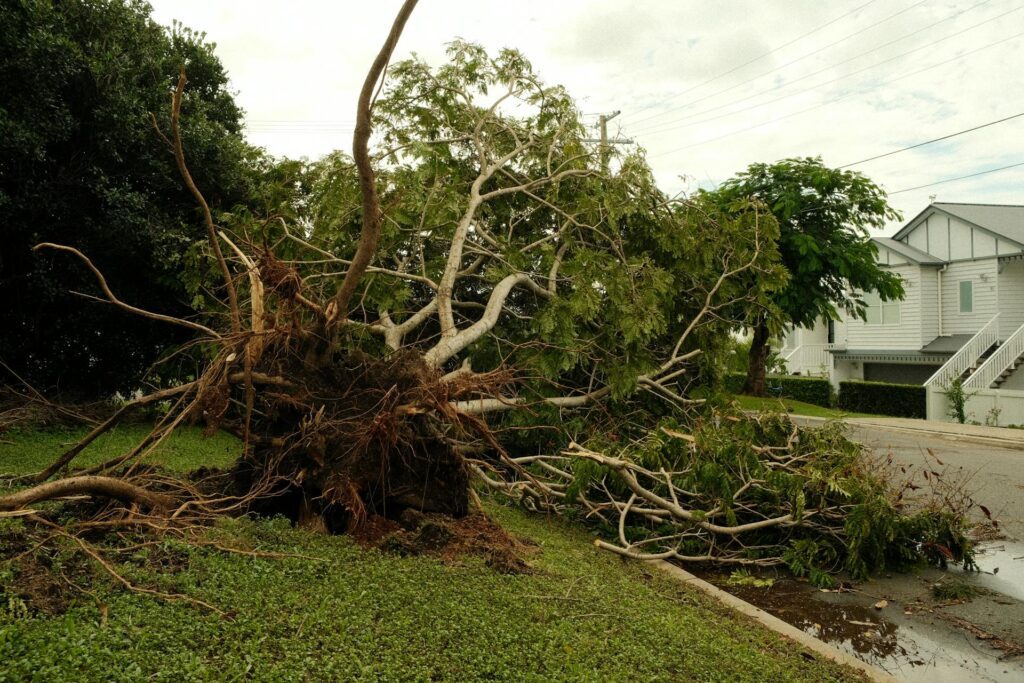
Some tree situations cannot wait for a regular scheduling window. If you have a tree actively threatening your home, a limb hanging over occupied space, or a trunk that shifted after a storm, getting the right help fast is what matters.
What counts as an emergency tree situation
Know the difference between true emergencies and urgent but scheduleable work:
- Trees or large limbs fallen on or against a home, garage, vehicle, or fence and causing active damage
- Split trunks under stress that could fall into occupied or high-traffic areas
- Large hanging limbs lodged overhead and at risk of falling
- Trees visibly tilting further after ground saturation or root failure
- Root balls that have partially heaved and the tree is clearly unstable
- Trees in contact with or close to power lines following storm damage
Non-emergency but urgent situations include dead trees with no active movement or leaning trees that have been stable but are too close to the house. Both deserve attention; the difference is whether immediate action is required.
Hazardous and leaning tree situations in Murfreesboro
Signs that a tree needs professional evaluation before it becomes a bigger problem:
- Lean and root instability that increases after storms or heavy rain
- Trunk decay, hollows, fungal growth, or cracking bark
- Dead or dying limbs that signal an increased risk of failure
- Root zone damage from construction, grade changes, or nearby excavation
- Storm-related structural changes such as lost limbs or shifted load distribution
Why not to attempt DIY on an emergency tree
Emergency tree situations carry hidden risks:
- Stored energy in stressed wood can move unpredictably when cut
- Fall zones for uprooted or leaning trees are not always obvious
- Chainsaw kickback, root ball weight, and adjacent structure risk make DIY attempts dangerous
- Temporary bracing often makes the crew’s job harder rather than safer
The dollar amount saved doing it yourself is not worth the exposure if something goes wrong. Get a professional on-site for genuine emergency and hazard situations.
What to expect with an emergency call
- Secure the area: Keep people, pets, and vehicles away from the danger zone and call the utility company first if lines are involved.
- Document the situation: Take photos before any work begins for insurance claims and crew clarity.
- Call or submit a request: Describe the tree, what happened, what it is near, and the immediate risk to prioritize dispatch.
- Stay clear: Do not try to manage the situation with tarps, ropes, or makeshift bracing.
- After the tree is down: Evaluate stump grinding and debris haul-off while the crew is on-site.
The cost of waiting on a hazard tree
Many homeowners watch a tree lean more over seasons and delay action until it fails, which usually results in emergency cleanup, structural damage, insurance claims, and accelerated timelines. Controlled removal on your schedule is safer, less expensive, and less disruptive than reactive work. When you document the hazard, it also helps your insurer understand the situation before it escalates.
Emergency coverage area
Emergency and hazardous tree service coverage spans Murfreesboro, Smyrna, La Vergne, Christiana, Rockvale, Eagleville, and the broader Rutherford County area. Reach out immediately for urgent situations; availability varies with storm volume, but genuine hazards are prioritized.
Emergency tree FAQs
Have questions about response time, utilities, or cost? Read the FAQ or call us with a brief description so we can start triaging your situation.
Get emergency tree help
If a hazardous tree, storm-damaged trunk, or actively threatening situation affects your Murfreesboro property, document the damage, secure the area, and reach out for a safety review and scheduling before it escalates.
Request emergency tree help now or call for the fastest response.